Which Labs Need for Anion Gap Determination?
What This Measure Tracks
The anion gap is a computed value that assists clinicians evaluate electrolytes and interpret acid-base balance. It is frequently used as part of the workup for metabolic acidosis, particularly when the cause is not immediately obvious. An Anion Gap Calculator is merely a tool that performs the calculation from the key laboratory values, but the result is only as useful as the data entered and the clinical context around it.
In practical terms, the anion gap estimates the difference between the positively charged and negatively charged particles measured in the blood. Because routine chemistry panels do not measure every ion, the result can suggest whether there are unmeasured anions driving an acid-base disorder. That makes the anion gap a useful piece of laboratory values interpretation, especially when assessing a potential metabolic derangement.
The anion gap is not a standalone diagnosis. It is a initial and clinical clue that must be interpreted alongside symptoms, physical findings, and other tests. When used correctly, it can help narrow the causes of altered acid-base status and points toward conditions that may require urgent attention.
Panels Required for Anion Gap Calculation
The main labs needed for anion gap calculation are sodium, chloride, and bicarbonate. These are frequently reported on a basic metabolic panel and also additionally appear on a comprehensive metabolic panel or electrolyte panel. Many Anion Gap Calculator tools use these three values in the typical formula.
The most common formula is:
Anion gap = sodium - (chloride + bicarbonate)
In many lab reports, bicarbonate may be listed as serum CO2. In routine chemistry testing, serum CO2 is used as a common surrogate for bicarbonate, so the reported number is typically the value entered into an anion gap calculator. That is one reason why understanding the exact label on the panel matters.
A basic metabolic panel is often the quickest way to obtain the needed values. A comprehensive metabolic panel includes the same electrolytes plus additional serum chemistry markers, so it can also support the calculation. If the patient already has either panel, the anion gap can usually be derived with no need for ordering extra testing.
For precise calculation, the labs should come from the same sample or from closely timed sampling. Mixing values from different draws can create confusion in interpretation, especially if treatment has already started or if the patient’s status is changing rapidly.
How an Anion Gap Calculator Uses Lab Values
An anion gap calculator applies the anion gap formula directly to the reported laboratory values. The calculation itself is straightforward, but the meaning of the result depends on the normal range used by the laboratory and on the patient’s clinical context. Different analyzers and reporting methods may produce slightly different reference intervals, so the local reference range matters.
Most calculators use sodium, chloride, and bicarbonate as the primary inputs. Some also allow optional adjustment for albumin, because albumin is a major unmeasured anion in blood and can strongly affect the result. If albumin is not included, the displayed result is the uncorrected anion gap.
The calculation works as a rapid estimate of the balance between measured cations and measured anions. If chloride and bicarbonate are relatively high compared with sodium, the anion gap may be low or normal. If the difference is larger than expected, the result is elevated, which can suggest excess unmeasured anions.
Many clinicians use the anion gap as a initial interpretation tool rather than a final answer. It helps determine whether acidosis is likely due to a buildup of acids or due to a loss of bicarbonate with compensatory changes in chloride. In that sense, it is a practical part of bedside and laboratory-based calculation.
Why Albumin Can Change the Result
Albumin is one of the key factors that can influence the anion gap. Because albumin bears a negative charge, lower albumin levels can make the measured anion gap look lower than expected. This is especially important in hypoalbuminemia, where the uncorrected value may devalue the true degree of acid retention.
When albumin is reduced, clinicians may calculate a corrected anion gap to more precisely represent the patient’s true acid-base condition. This adjustment helps compensate for the loss of negatively charged serum proteins. Without this step, a patient with significant metabolic acidosis could appear to have a misleadingly normal result.
Not every situation requires correction, but it becomes more necessary when the patient has chronic illness, inflammation, malnutrition, liver disease, or fluid overload—situations in which albumin may be abnormal. If albumin is not available, the result can still be used, but the interpretation should be more reserved.
When using an Anion Gap Calculator, it is useful to ask whether the tool reports a corrected or uncorrected result. If albumin is entered, the calculator may use a correction formula that estimates the effect of hypoalbuminemia on the apparent gap. That can increase clinical accuracy, especially when evaluating acid-base status in complex cases.
When Further Labs May Be Requested
Although sodium, chloride, and bicarbonate are the main tests, additional studies are often requested to clarify the cause of an abnormal gap. An arterial blood gas or another blood gas measurement may be obtained to check pH, pCO2, and the general acid-base disorder. This is especially helpful when the bicarbonate value alone does not fully reflect the clinical picture.
Lactate is commonly ordered when lactic acid accumulation is suspected. Elevated lactate can lead to a high anion gap metabolic acidosis, and it is an important clue in patients with sepsis, poor perfusion, hypoxia, or other states of tissue stress. In the right setting, checking lactate is essential for a more complete diagnostic assessment.
Ketones are another frequent add-on test, particularly when diabetic ketoacidosis is a concern. Ketone production can drive an elevated anion gap and is a classic cause of metabolic acidosis. If glucose is high or symptoms fit, ketone testing can determine whether ketoacidosis is contributing to the laboratory pattern.
Renal function testing is also frequently ordered. Creatinine, blood urea nitrogen, and related markers help determine whether kidney impairment is reducing acid excretion. A decline in renal function can be associated with accumulation of acids and a rising gap, so these values enhance the overall interpretation.
Based on the scenario, clinicians may also order a broader electrolyte panel or repeat the chemistry tests to confirm a surprising result. Rechecking can help rule out sampling error, specimen handling issues, or a transient change that is already resolving.
Understanding a High vs Normal Anion Gap
A high anion gap metabolic acidosis implies that extra acids are found in the blood or that unmeasured acids have accumulated. This often suggests excess hidden anions such as lactate, ketoacids, or toxins. The term is informational rather than diagnostic, so the clinical interpretation must determine the underlying cause.
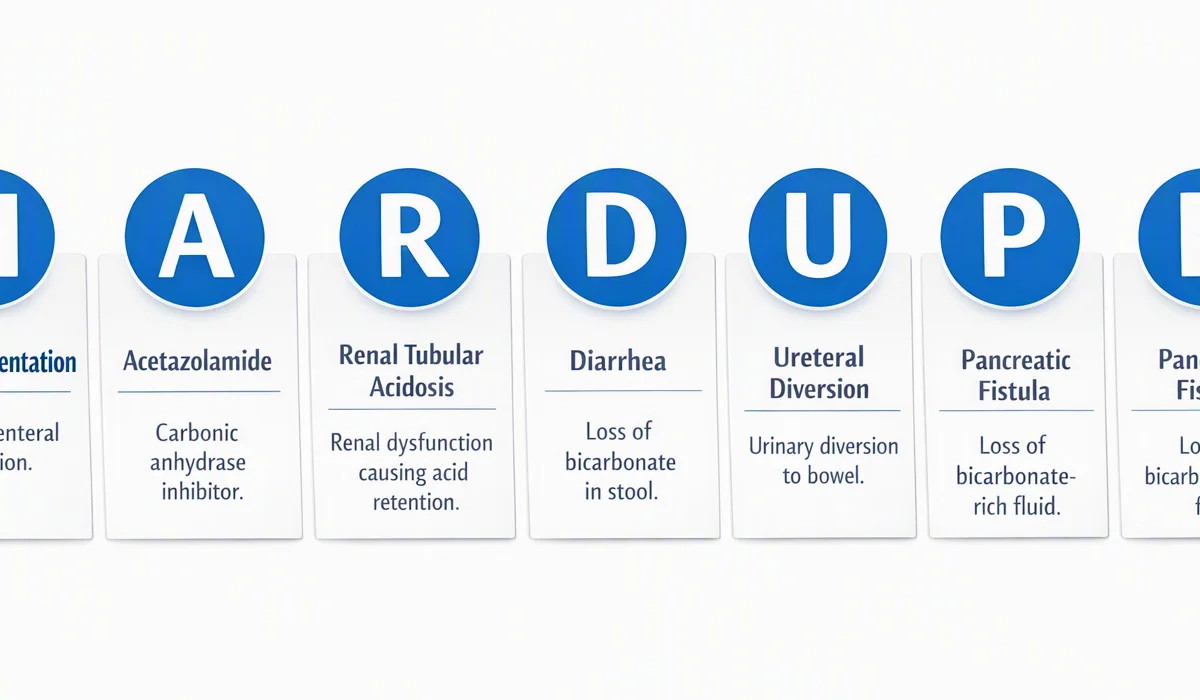
A normal anion gap metabolic acidosis can still be clinically significant. In this scenario, bicarbonate is low, but the gap remains within the expected normal range because chloride rises to balance the loss. This is often called hyperchloremic metabolic acidosis. The result does not exclude acidosis; it simply points to a different mechanism.
Making sense of the result requires attention to the full clinical context. A patient with severe symptoms, abnormal pH on a blood gas, or concerning laboratory trends may need immediate treatment regardless of whether the gap is high, normal, or borderline. The anion gap is best used as part of a broader diagnostic interpretation rather than in isolation.
One useful way to think about the result is this: a high gap often implies hidden acid burden, while a normal gap suggests either no major accumulation of unmeasured anions or a separate process that lowers bicarbonate without widening the gap. Either way, the result is a clue, not the final answer.
Typical Causes Affecting the Anion Gap
A number of conditions can affect the anion gap, but a few causes are especially important because they are widely seen and clinically urgent. Lactic acidosis is a major cause of increased gap and may occur with sepsis, shock, hypoxia, seizures, or medication effects. Because lactate reflects impaired oxygen utilization or supply, it often requires prompt evaluation.
Diabetic ketoacidosis is another well-known cause. In this condition, ketone acids accumulate when the body lacks sufficient insulin or cannot use glucose well. Ketones lower bicarbonate and elevate the anion gap, which is why both serum chemistry and ketone testing are best used together.
Kidney failure can also raise the gap because the kidneys cannot adequately eliminate acid load or maintain normal balance of electrolytes and bicarbonate. As renal function declines, acids collect and the laboratory pattern may become more obvious.
Toxic alcohols are an important consideration in patients with unexplained high-gap acidosis. These exposures can generate organic acids and cause a dangerous metabolic profile. When history, symptoms, or lab findings suggest possible ingestion, immediate toxicology evaluation is warranted.
Other causes may include starvation, severe illness, certain medications, and less common metabolic disorders. The anion gap helps organize the differential diagnosis, but it should never replace targeted history-taking, examination, and follow-up testing.
How to Use an Anion Gap Calculator Properly
When using an Anion Gap Calculator accurately, start by entering the correct lab values from the same specimen whenever possible. Confirm the units and make sure the bicarbonate field corresponds to either bicarbonate or serum CO2, depending on how the calculator is designed. A mismatch here can lead to a misleading result.
Next, confirm the reference range used by the calculator or the laboratory report. Normal values can change a little by method, analyzer, and institution. A result that seems mildly elevated in one setting may fall within the local normal range in another. This is why the lab-specific interval matters so much in interpretation.
Focus on unit consistency. Sodium, chloride, and bicarbonate should be in the expected format and not mixed with values from a delta ratio for mixed disorders different panel or unit system. Uniform input helps ensure that the formula gives a reliable result.
It is also useful to know whether the source data came from a basic metabolic panel, a comprehensive metabolic panel, or a standalone electrolyte panel. All can provide the needed values, but each may have different additional markers that support clinical assessment. For example, a CMP can help pair the anion gap with liver-related or protein-related findings, while a BMP is often focused more tightly on kidney and electrolyte assessment.
Finally, interpret the result in the full clinical context. The calculator can show whether the gap is increased, decreased, or within range, but the meaning depends on symptoms, trends, and associated tests. A good result from an Anion Gap Calculator is one that helps direct the next diagnostic step, not one that stands alone.
FAQ
What tests are needed to calculate the anion gap?
The required labs are sodium, chloride, and bicarbonate. In many reports, bicarbonate appears as serum CO2. These values are usually taken from a basic metabolic panel, a comprehensive metabolic panel, or an electrolyte panel.
Does an anion gap calculator need albumin?
Not always, but albumin is especially useful when present. Reduced albumin can reduce the measured gap, so a calculator that includes albumin can calculate a corrected anion gap. That is most useful in hypoalbuminemia.
Can the anion gap be calculated from a CMP or BMP?
Yes. A basic metabolic panel and a comprehensive metabolic panel usually provide the necessary values for anion gap calculation. Both generally list sodium, chloride, and bicarbonate or serum CO2, which are adequate for the standard formula.
What does a high anion gap mean?
A high anion gap usually indicates a buildup of unmeasured anions and is often associated with high anion gap metabolic acidosis. Common causes include lactic acid accumulation, ketones, diabetic ketoacidosis, kidney failure, and toxic alcohols.
Why might an anion gap be normal even when acidosis is present?
That pattern can occur in normal anion gap metabolic acidosis, where bicarbonate is lost but chloride rises enough to keep the gap in the reference range. In that situation, acidosis is still present, but the mechanism is different, so the result must be interpreted with medical interpretation and often a blood gas.