How to Use an Anion Gap Calculator From a Detailed Metabolic Panel
Understanding the Anion Gap?
The anion gap is a computed result used to help assess electrolyte balance and acid-base status. It shows the gap between the main measured ions in blood and helps determine the amount of unmeasured anions. In basic terms, it is a indicator about whether the body’s chemistry is holding within normal limits or showing signs of a metabolic disturbance.
This concept is based on electroneutrality, meaning blood must remain electrically balanced. Positive ions and negatively charged particles must offset each other. Because not every ion is directly measured on routine testing, the anion difference can expose hidden shifts in chemistry that would otherwise be missed.
An anion gap calculator is a practical diagnostic aid that uses common lab values to estimate this difference. It does not replace a full clinical interpretation, but it can quickly support a physiologic assessment of the patient’s serum chemistry. The result is often used as a screening tool to direct the next step in evaluation.
How an Anion Gap Calculator Works From a CMP
An anion gap calculator typically uses results from a comprehensive metabolic panel, which includes multiple essential lab values. The main inputs are sodium, chloride, and bicarbonate. Some calculators also let you include potassium to be included, depending on the formula being used.
A comprehensive metabolic panel is one of the most common blood tests ordered in routine care and acute evaluation. It provides a more complete snapshot than a basic metabolic panel, because it also includes measures such as liver-related markers and serum albumin. For anion gap interpretation, the electrolyte portion of the panel is the key part, especially the relationship between sodium, chloride, and bicarbonate.
Because the formula compares these measured ions, the calculator can indicate whether there is an unexpected accumulation of unmeasured anions or whether something is lowering the expected anion concentration. This makes it helpful for identifying a hidden metabolic disturbance that may need further attention.
Anion Gap Formula and Stepwise Calculation
The usual anion gap formula is commonly:
Anion gap = Sodium - (Chloride + Bicarbonate)
Certain versions add in potassium as well:
Anion gap = Sodium + Potassium - (Chloride + Bicarbonate)
Most current calculations omit potassium because it exists in a significantly smaller concentration and has less influence on the final value. Even so, knowing both approaches is valuable, especially when reviewing older reports or different calculator methods.
Below is a straightforward step-by-step process:
- Find the sodium value on the CMP.
- Locate the chloride value.
- Locate the bicarbonate value, sometimes reported as CO2.
- Add chloride and bicarbonate.
- Take away that sum from sodium.
For instance, if sodium is 140, chloride is 103, and bicarbonate is 24, the calculation is:
140 - (103 + 24) = 13
That result indicates the estimated anion gap. The purpose is not just arithmetic; it is a indicator about acid-base status and whether hidden acids or other unmeasured anions may be affecting the patient’s chemistry.
If potassium is included, the result will be a bit different, but the same logic applies. The calculator plainly transforms the CMP into a fast estimate that supports clinical interpretation.
Standard Anion Gap Limits and Their Meaning
The reference range for the anion gap can change by laboratory because each facility uses its own reference range and measurement method. This is why the printed range on a lab report should always be checked before making conclusions. Slight variations in measurement methods can shift the number.
A normal anion gap usually suggests that the balance between measured and unmeasured ions is not reflecting a major abnormality. However, a normal result does not automatically rule out illness. The number must be viewed alongside symptoms, other test values, and the rest of the blood work.
A high anion gap often suggests extra acids or other unmeasured substances are present. This can point toward a significant metabolic problem that affects acid-base status. In contrast, a decreased anion gap is less common and may reflect protein changes, measurement issues, or other unusual factors.
Because the range depends on the lab, the best interpretation comes from comparing the result with the patient’s actual reference range rather than using a single universal cutoff. The calculator is a screening aid, not a stand-alone diagnosis.
Frequent Causes of a Elevated Anion Gap
A elevated anion gap often points to acidic metabolic imbalance, a condition in which acids build up or bicarbonate is depleted. This is one of the most important uses anion gap in chronic kidney disease of the anion gap calculator, because it can help uncover a significant metabolic disorder that needs timely evaluation.
Common causes include lactate acidosis, where lactic acid accumulates during reduced oxygen delivery to tissues, severe illness, or impaired metabolism. Another important cause is ketone acidosis, which may occur when ketones rise during diabetes-related insulin deficiency, prolonged fasting, or other catabolic states.
Impaired kidney function can also increase the anion gap because the kidneys cannot clear acids efficiently. As a result, undetected anions accumulate in the blood. Other conditions may contribute as well, but these are among the most important clinically explanations to consider first.
A high https://anion-gap-range427.timeforchangecounselling.com/anion-gap-calculator-with-expected-range-and-what-the-result-means result does not identify the exact problem by itself. It is a clue that the body may be dealing with excess acid production, reduced acid removal, or another shift in electrolyte balance. The value must be interpreted with symptoms, history, and other laboratory findings.
Frequent Reasons of a Low Anion Gap
A decreased anion gap is not as common than a high one and often deserves close evaluation. One of the most frequent explanations is hypoalbuminemia, or low blood albumin. Since albumin is a negatively charged protein, reduced amounts can reduce the calculated gap even if no major acid-base problem is present.
Lab error is another important possibility. Since the formula depends on a few key lab values, a small measurement issue with sodium, chloride, or bicarbonate can change the result. Repeating the analysis may be necessary if the number does not fit the clinical picture.
Paraproteinemia, which involves abnormal proteins in the blood, can also lower the anion gap. These proteins may affect the balance of charged particles and interfere with the expected relationship between measured and unmeasured ions. In some cases, this finding can be an important clue that prompts further workup.
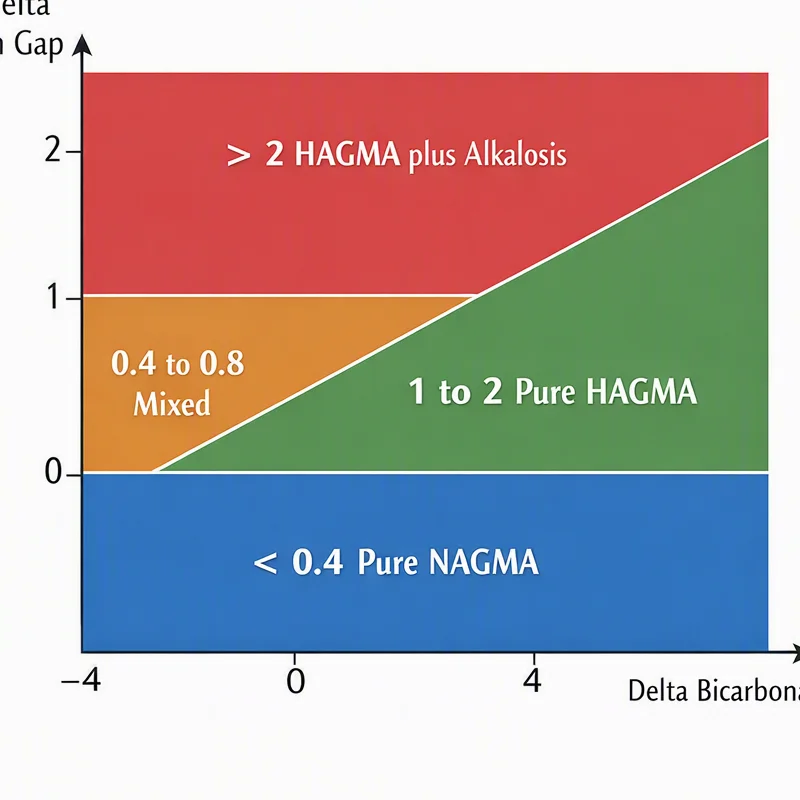
Although a low value may seem less urgent than a high one, it should still be reviewed in context. Sometimes it reflects a straightforward protein issue; other times it may be an early signal that warrants a more careful look.
Albumin Correction and Why It Matters
Albumin adjustment matters because serum albumin significantly influences the anion gap. With low albumin, the calculated gap can appear falsely low or not as elevated as expected. That is why a corrected anion gap may give a more reliable picture of the patient’s acid-base state.
Adjusting for albumin helps account for the fact that albumin is one of the most important unmeasured negatively charged substances in blood. If albumin is reduced, the gap may not fully reflect the presence of acids or other unmeasured negatively charged ions. A correction can therefore strengthen medical interpretation.
The specific correction method can vary by laboratory or clinical protocol, but the general purpose is the same: adjust the number so the result better reflects the patient’s actual chemistry. This adjusted number is the corrected anion gap, a more helpful adjusted result when albumin is abnormal.
Albumin correction does not replace the rest of the evaluation. It simply keeps the calculator more precise as a clinical aid, especially when the blood chemistry suggests the possibility of an acid-base disorder but the uncorrected result looks apparently normal or low.
How to Interpret Results Safely
The best way to interpret the anion gap is to use clinical context. The number on its own does not tell the full story. Signs, medications, vital signs, kidney function, nutrition status, and other laboratory findings all matter. A close look at acid-base status helps show whether the result reflects a true problem or a minor lab variation.
Think of the anion gap calculator as a quick guide that supports physiologic assessment. It can help flag a possible issue, but it should not be used as the sole basis for decision-making. A normal anion gap can still coexist with illness, and a high anion gap may need quick follow-up depending on the broader situation.
Clinical interpretation is especially important when the result does not fit the rest of the picture. If the lab values seem inconsistent with symptoms, the next step may involve repeating the blood test, reviewing the lab method, checking serum albumin, or evaluating for metabolic causes such as lactic acidosis, ketoacidosis, or renal failure.
Because the calculator is a screening aid, not a final diagnosis, a medical evaluation is needed when there are serious symptoms, severe abnormalities, or uncertainty about the cause. The value becomes most useful when it is part of a wider clinical picture rather than a standalone number.
Frequently Asked Questions
How do you determine the anion gap from a comprehensive metabolic panel?
Use the anion gap formula: sodium - (chloride + bicarbonate). These values come from the comprehensive metabolic panel. Some formulas also include potassium, but many standard calculators do not. The result provides the anion gap and helps with blood test interpretation.
What is a normal anion gap value?
The expected anion gap is based on the laboratory’s reference range and analysis technique. There is no single universal cutoff. Always compare the result to the range printed with the CMP results so the medical interpretation is correct.
What can a high anion gap mean?
A increased anion gap often suggests metabolic acidosis from extra acids or other unmeasured anions. Common causes include excess lactic acid, ketone buildup, and renal failure. It is a clue that the body’s acid-base status may be abnormal and should be reviewed in context.
Does low albumin affect the anion gap result?
Yes. Blood albumin strongly affects the result, and decreased albumin can cause a lower-than-expected value. That is why albumin adjustment is often used to calculate a adjusted anion gap. This helps avoid missing an important acid-base problem.
Can an anion gap calculator adequate to diagnose a medical condition?
No, it is not. An Anion Gap Calculator is a useful initial check and helpful aid, but it is not enough on its own. The result must be interpreted with symptoms, other test values, and the full clinical context. A proper clinical evaluation is needed to identify the cause of an abnormal result.