Can Hyperproteinemia Affect the Anion Gap?
What Is an Anion Gap?
The anion gap is a computed value used in laboratory interpretation to support the assessment of acid-base balance and identify certain acid-base disorders. It evaluates the main measured electrolytes in blood, especially sodium, chloride, and bicarbonate, to estimate the balance between unmeasured positively and negatively charged particles in the bloodstream.
In simple terms, the anion gap reflects charge balance in a blood sample. A normal value suggests the measured ions are in a typical relationship, while an abnormal result can be a diagnostic clue for conditions such as metabolic acidosis or a protein-related change in serum chemistry. Because the result comes from a formula rather than a direct measurement, understanding the underlying pathophysiology matters.
The anion gap is often used as a screening test during workups of unexplained illness. It does not diagnose a disease by itself, but it helps clinicians think through the cause of an electrolyte imbalance and decide what to test next.
How an Anion Gap Calculator Operates
An anion gap calculator draws on values from routine blood test results to carry out the anion calculation. Most commonly, it uses serum sodium, serum bicarbonate, and serum potassium, though potassium is sometimes omitted depending on the formula applied by the lab or calculator. The goal is to measure the difference between recorded cations and anions.
A widely used version of the formula is:
Anion gap = sodium − (chloride + bicarbonate)
Some calculators also include potassium, which alters a bit the result. No matter the formula, the key idea is the same: the calculation helps spot shifts in electrolytes that may suggest an underlying problem with acid-base status.
Using an anion gap calculator is helpful because it reduces manual errors and gives a quick estimate of whether the result is within the expected reference range. Still, the number should always be read with the rest of the blood chemistry panel, not alone.
Can Hyperproteinemia Change the Anion Gap?
Absolutely, hyperproteinemia can affect the anion gap, and in many cases it may contribute to a low anion gap. The effect depends on the nature and quantity of protein present, especially the balance of albumin, paraproteins, and other plasma proteins. This is where the medical relevance becomes important: not all protein elevations modify the anion gap in the same way.
This protein is one of the most important unmeasured anions in blood. When albumin is low, the anion gap may fall. But hyperproteinemia can also involve excess abnormal proteins, especially paraproteins, which may behave differently from normal albumin. Some of these proteins can carry a positive charge and lower the apparent anion gap by changing the overall charge balance in serum.
This is why a protein-related abnormal result can be a valuable diagnostic clue. In some cases, hyperproteinemia points to a broader systemic disease, and the anion gap calculator becomes one piece of the diagnostic interpretation rather than the final answer.
How Abnormal Protein Levels May Change Lab Results
Abnormal proteins can influence lab results because proteins contribute to the charge balance of blood. Some proteins act as cationic proteins, while others are similar to negatively charged proteins. When the concentration or kind of protein changes, the measured electrolyte balance can change even if sodium, chloride, and bicarbonate look only mildly changed.
In simpler terms, this means an increase in abnormal proteins can cause a measurement artifact or a true biochemical shift. A lab artifact does not mean the result is useless; it means the number may not represent the full clinical picture without context. That is why laboratory interpretation should always consider protein concentration, acid-base status, and the patient’s overall condition.
Hyperproteinemia may also interfere with routine assays in ways that influence how results are reported. While urine anion gap app modern laboratory methods are highly reliable, no test is perfect. A pattern that seems inconsistent with the patient’s symptoms may reflect a lab artifact, a protein-related shift, or both. Understanding this helps avoid overcalling acid-base disorders or missing an important underlying diagnosis.
Typical Causes of Hyperproteinemia
Different conditions can cause hyperproteinemia, and the cause often shapes the effect on the anion gap. One straightforward cause is dehydration, which decreases plasma water and leads proteins to appear more concentrated. In that situation, the protein concentration rises relative to the fluid portion of blood, but the clinical effect on the anion gap may be modest unless other abnormalities are present.
More important causes include multiple myeloma and monoclonal gammopathy, both of which can increase abnormal immunoglobulins in the blood. These paraproteins may disrupt charge balance and create a low anion gap. This is a classic laboratory interpretation pitfall because the anion gap may be the first clue that leads to further workup.
Chronic inflammation can also raise total protein by increasing certain globulins. In these cases, hyperproteinemia may reflect a chronic systemic disease rather than a primary blood disorder. The pattern of protein changes, along with the rest of the serum chemistry, helps determine whether the finding is benign, transient, or clinically important.
Reduced Anion Gap vs High Anion Gap: What to Watch For
A decreased anion gap is the result most often linked to hyperproteinemia, especially when paraproteins are present. Unusual proteins can decrease the calculated gap by shifting the balance of unmeasured ions. In contrast, high anion gap metabolic acidosis usually points to excess acids in the blood, such as lactate or ketones, and is not typically caused by protein excess alone.
This distinction is important because a high gap and a low gap have different clinical meaning. A low gap may suggest protein abnormalities, medication effects, or a lab-related issue, while a high gap more often suggests metabolic acidosis. That said, both can occur in complex illness, so the result should always be viewed alongside symptoms and the rest of the panel.
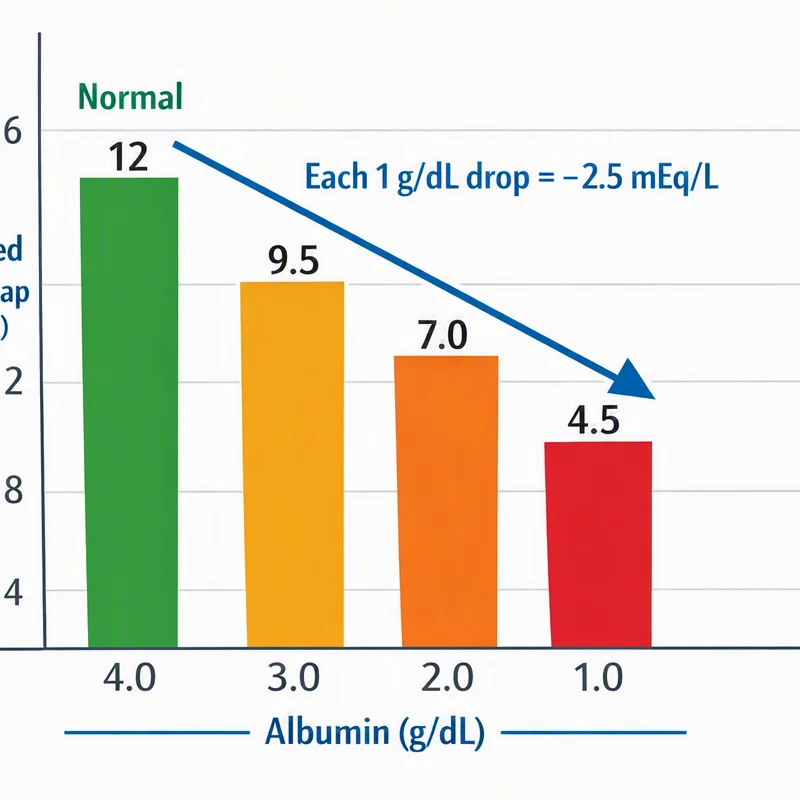
Albumin correction is especially useful when a low albumin level might be hiding the true acid-base status. Since albumin is a major unmeasured anion, low albumin can lower the anion gap and make the value seem less concerning than it really is. Correcting for albumin helps estimate a corrected anion gap and makes the result more accurate for detecting acid-base disorders.
Interpreting Findings Within Clinical Context
Understanding the anion gap correctly requires reviewing more than one number. The key clues often come from serum albumin, total protein, and the full blood chemistry panel. If total protein is high and the anion gap is low, hyperproteinemia becomes more relevant. If albumin is low, the gap should be adjusted before reaching conclusions about acid-base status.
Clinicians also consider the broader acid-base status. For instance, a patient with metabolic acidosis and a normal gap may still have a serious illness, while a low anion gap with no symptoms may reflect a protein-related issue or an artifact. The same number can mean something different depending on the rest of the blood test findings.
Here is where anion gap calculator is especially helpful: it gives a quick starting point for diagnostic interpretation, but the meaning of the result depends on the clinical context. A single number cannot explain the whole story. Symptoms, medications, hydration, kidney function, and protein studies all influence the final interpretation.
When to Recheck or Order Additional Labs
If the result appears unusual, retesting the lab is commonly the initial step. Reviewing the specimen again can help rule out specimen issues, collection problems, or a minor calculation discrepancy. A repeat result also helps determine whether the abnormality is lasting or short-lived.
When protein abnormalities are suspected, protein electrophoresis is a common next test. It can help detect monoclonal proteins and anion gap in chronic kidney disease differentiate causes such as multiple myeloma or monoclonal gammopathy from more nonspecific protein elevation. In certain cases, a complete complete metabolic panel or other targeted blood studies are needed to clarify the clinical picture.
Whether to request more testing should consistently rely on clinical correlation. If the patient is stable and the abnormality is minor, the finding may not require rapid action. If symptoms, renal issues, anemia, bone pain, or other signs point to a plasma cell disorder, additional testing becomes more important. The anion gap should support evaluation, not substitute for it.
FAQ: Hyperproteinemia and Anion Gap
Can hyperproteinemia lower the anion gap?
Yes, it can. Hyperproteinemia can decrease the anion gap, especially when the elevated proteins are paraproteins or other cationic proteins. These proteins can change charge balance and create a decreased anion gap on laboratory testing.
Does hyperproteinemia cause a high or low anion gap?
It most often causes a decreased anion gap rather than a elevated one. A high anion gap metabolic acidosis usually points to excess acid buildup, while protein excess is more likely to lower the calculated gap.
Should albumin be corrected when using an anion gap calculator?
Yes, it should, albumin correction is essential when serum albumin is low. Since albumin strongly affects the anion gap, correcting for it can reveal the corrected anion gap and enhance diagnostic interpretation.
What lab factors can make the anion gap look abnormal?
Several lab factors can influence the result, including testing artifact, changes in electrolytes, low serum albumin, and abnormal plasma proteins. Evaluating the full blood chemistry panel helps reveal whether the abnormal result is genuine or deceptive.
When should additional testing be done after an abnormal anion gap result?
Additional testing is appropriate when the abnormality is ongoing, unaccounted for, or paired with symptoms or other abnormal blood test results. Protein electrophoresis, repeat lab testing, and a complete metabolic panel are frequent follow-up studies when hyperproteinemia or a plasma cell disorder is suspected.